
COP17 and the Global Biodiversity Framework: What Companies Need to Know

As the biodiversity agenda shifts from commitments to action, companies that map their exposure and connect nature-related goals with business decisions will be better placed to respond.
What Is COP17 and the Global Biodiversity Framework—and Why Does It Matter?
Governments and other stakeholders are gathering in Yerevan, Armenia, from October 19 to 30, 2026, for the 17th meeting of the Conference of the Parties to the UN Convention on Biological Diversity (CBD COP17). The meeting will offer the first worldwide assessment of how implementation is advancing under the Kunming-Montreal Global Biodiversity Framework, the 2022 agreement intended to halt and reverse biodiversity loss by 2030.
COP17 comes four years after the Framework was adopted and four years before its 2030 deadline. Nearly 90% of countries have established national biodiversity targets, and more than 70% have submitted national reports, according to the UN’s 2026 State of Biodiversity Action report. The harder question is whether those plans are delivering quickly enough: according to the same report, fewer than half of national targets assessed by countries are on track. That gap is likely to put implementation at the center of the agenda, with attention spanning finance, institutional capacity, science and policy, biosafety, and benefit-sharing associated with genetic resources.
Business Implications of COP17 for Companies
For companies, the implications of COP17 will depend less on the negotiations themselves and more on subsequent government policy and regulatory actions. National responses can affect how businesses obtain raw materials, manage sites, fund projects, and sell products. Exposure is rarely confined to owned operations; rather, it can run through suppliers and customers and, for financial institutions, through lending, underwriting, and investment activities. These exposures span sectors ranging from agriculture and forestry to mining, energy, pharmaceuticals, food, apparel, and technology. Over time, national implementation could be reflected in permitting, rules governing land and water, procurement criteria, access-and-benefit-sharing obligations, incentives, and reporting expectations.
The conference is therefore an opportunity to test whether corporate approaches are keeping pace. A useful starting point is to identify where operations and suppliers depend on nature, where business activities affect nature, and which locations or commodities present the greatest exposure. That information can support choices about supplier engagement, risk controls, capital allocation, product development, and communication with investors and other stakeholders.
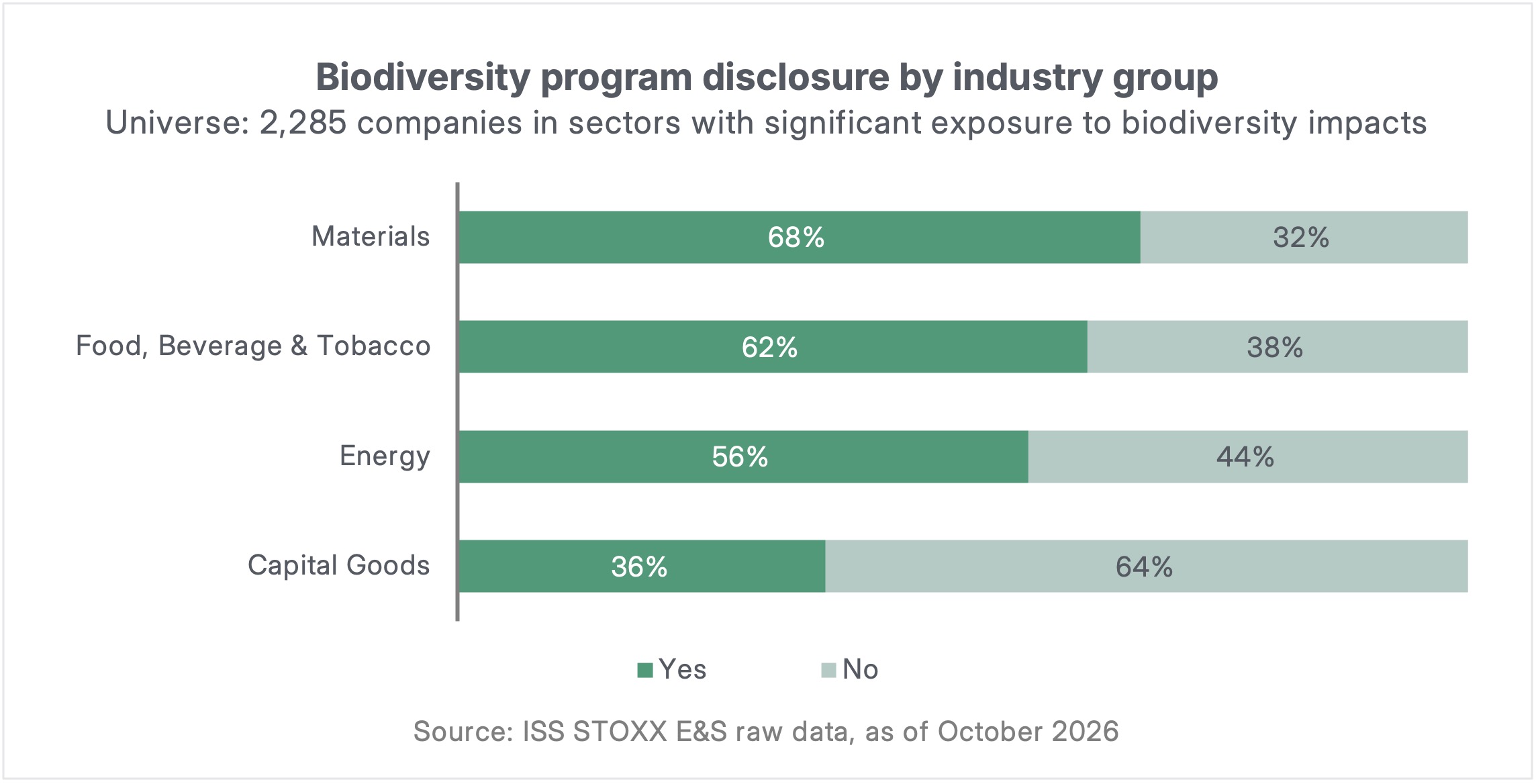
Company disclosure shows considerable variation in biodiversity programs across key industries, reflecting uneven progress in translating growing nature-related expectations into corporate action. Sectors with significant land use, natural resource extraction, water dependence, agricultural supply chains, and/or ecosystem impacts generally face elevated biodiversity-related risks and are likely to experience greater stakeholder and regulatory scrutiny. As governments translate the Global Biodiversity Framework into national measures, these types of companies may face increasing pressure to demonstrate that biodiversity commitments are supported by concrete programs addressing material impacts and dependencies across operations and value chains.
Preparing for Biodiversity Implementation and Evolving Expectations
Companies need not wait for the final negotiating text to begin preparing. COP17 can serve as a prompt to examine whether nature-related commitments are connected to governance and day-to-day decisions. Practical questions include:
- Which business units, locations, products, and suppliers have the most significant nature-related dependencies and potential adverse impacts?
- Do current targets and action plans address the most material value-chain risks?
- Can the organization support its public commitments with governance, resources, milestones, and evidence of progress?
- How might COP17 outcomes tighten regulatory requirements and stakeholder expectations across key markets?
The broader signal for business is that the biodiversity agenda is shifting from commitment-setting toward implementation and evidence of progress. As governments translate the Global Biodiversity Framework into national measures, companies that map their exposure now and connect nature-related goals with operational and investment choices should be better placed to respond to evolving expectations across markets and value chains.
Identify biodiversity risks and prepare for evolving expectations with ISS-Corporate »