
Global Trends in Women’s Corporate Leadership 2026

Women today represent nearly 30% of director positions globally among major corporations, but sharp regional differences and persistent glass ceilings remain. Our new analysis shows where women have taken on greater board opportunities and where their voice is limited in boardrooms.
As we mark International Women’s Day, ISS‑Corporate takes a look at trends in women’s board representation globally among major corporations, examining how representation levels and leadership roles vary across key markets. The latest data using Governance QualityScore reveal substantial regional differences, with some markets demonstrating high female board representation while others continue to trail global averages. These patterns provide important context for understanding how regulatory environments, market expectations, and governance practices shape board composition worldwide.
Global Standard on Women’s Board Representation
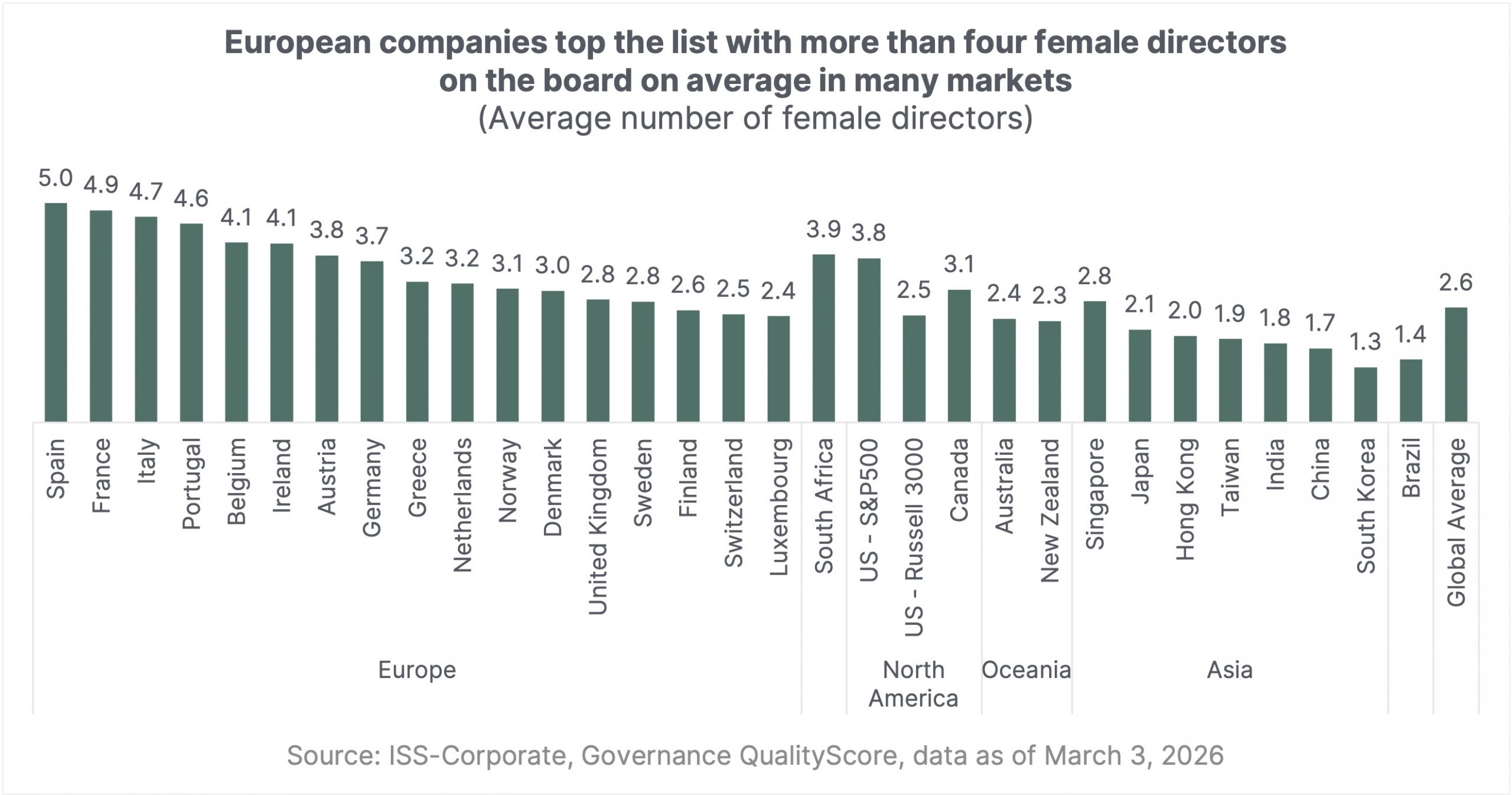
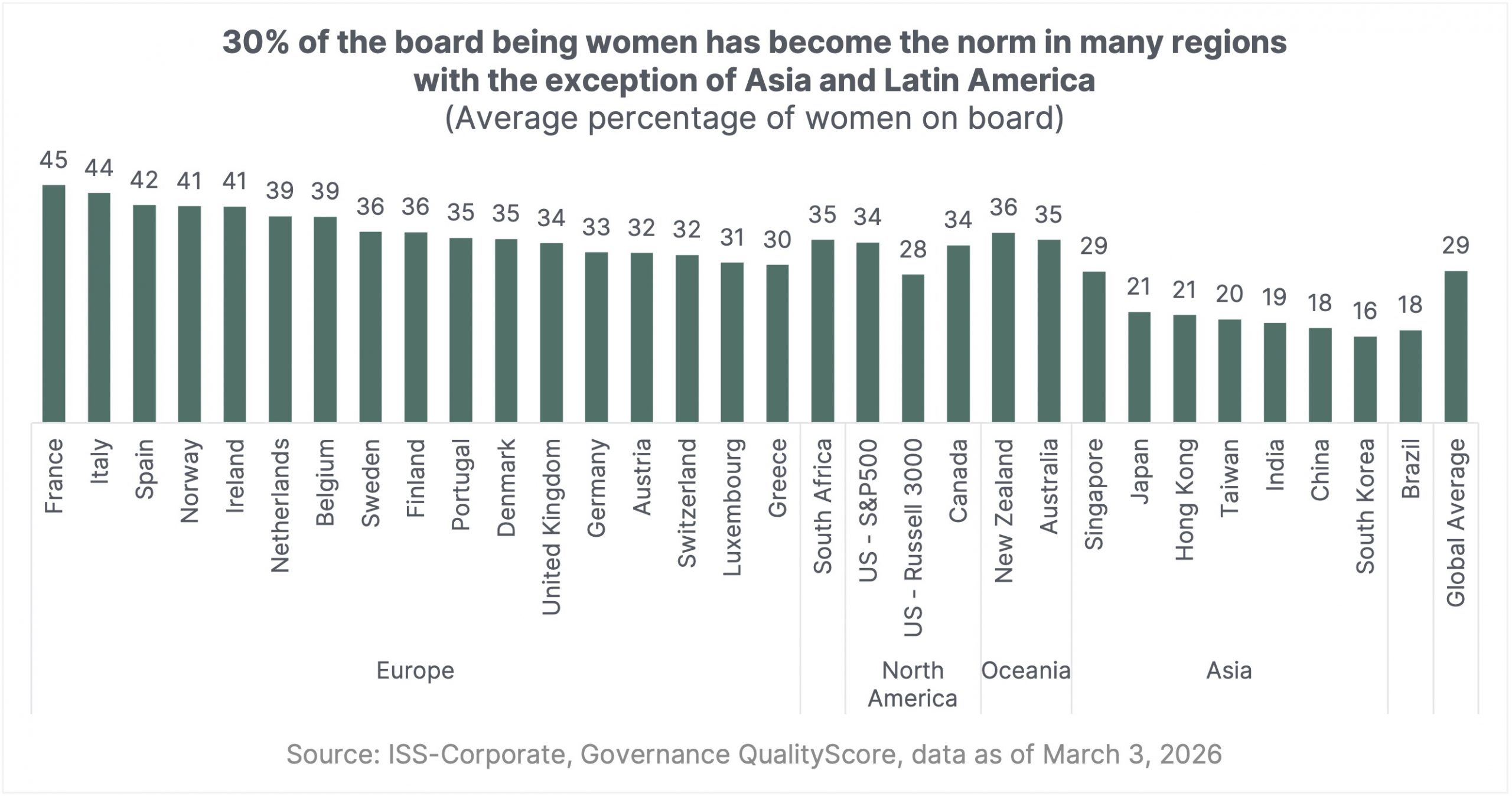
According to Governance QualityScore data, most companies globally have two or more women on the board, and nearly 30% of board positions are held by women on average.
Europe Leads in Female Directorships
European markets have the highest female board representation, with Spain, France, and Italy topping the list for both the number of women on the board and the proportion of the board that is women. France and Italy are also the only markets to near gender parity. Women make up at least 30% of the boards on average across all 17 European markets studied, reflecting the impact regulatory actions to encourage and sometimes mandate female board representations had on these markets.
Regional Gaps Persist Across Asian Markets
In contrast, female directors are much less common in Asian markets. Taiwan, India, China and South Korea have less than two female directors per board on average and less than 20% of the boards are women, with Korea ranking at the global bottom. Singapore is the only Asian market with the number and proportion of female board members at a globally comparable level.
Leadership Roles Highlight a Persistent Glass Ceiling
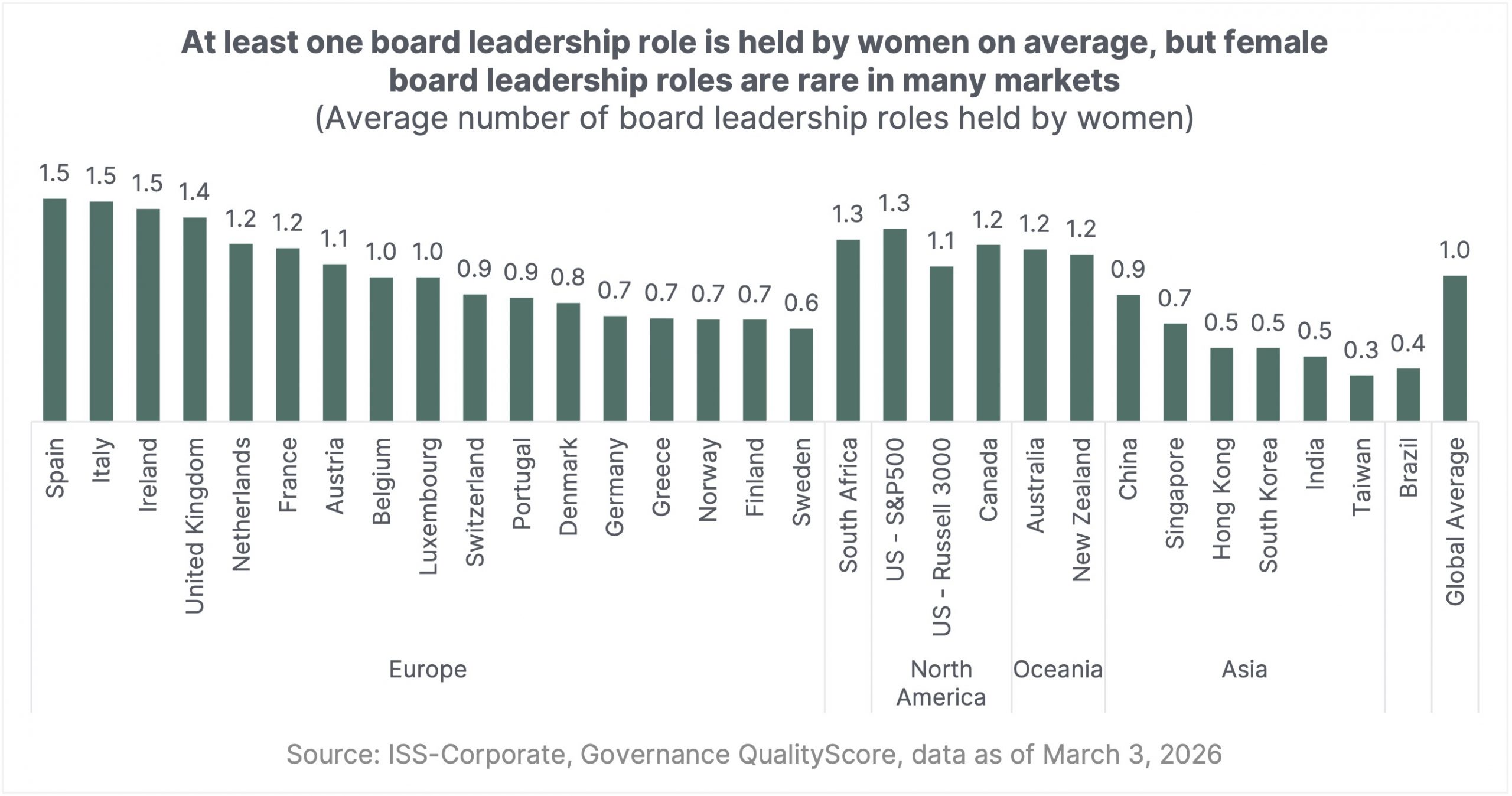
While women today hold nearly 30% of board seats globally, those holding leadership roles within the board are rare. Only one board leadership role—defined as the board chair, lead director, or the chair of any of the audit, compensation, or nominating committees—is occupied by women globally on average.
Many Asian markets lag behind the global norm with women holding no senior board role at most companies, but several European markets too have less than one board leadership role held by women despite having relatively higher female board participation. This suggests that while quotas and regulatory requirements may have pushed many companies in Europe to increase female directorships, women continue to face glass ceilings in many boardrooms.
What These Findings Mean for Boards Moving Forward
As the global data makes clear, women today make up a meaningful portion of corporate boards in many markets, but it remains uneven. Europe’s high board gender diversity demonstrates the impact that sustained regulatory action and cultural commitment had on the region’s board composition, while the low female board representation in many Asian and South American markets highlight the challenges women continue to face in these parts of the world. Even in regions with strong representation at the board level, leadership roles for women remain limited, underscoring persistent structural barriers. As companies’, regulators’, and investors’ priorities evolve, it is important for companies to understand their practice and address structural barriers and biases to ensure that the best talent—regardless of gender—is recruited to the board.