
COP31 Puts Electrification and the Clean Energy Transition in the Spotlight
COP31 reinforces the growing focus on implementation, with electrification highlighting the practical need for clean power, enabling infrastructure and investment.
The annual UN Climate summit, COP31, is underway in Türkiye. As seen at other climate gatherings throughout 2026, including Climate Week in New York, the emphasis continues to shift from setting commitments toward translating them into investment and implementation. Electrification is emerging as a key focus for practical implementation, bringing greater attention to the clean power, grids, storage and investment needed to electrify transport, buildings and industry.
For companies, the implications extend beyond access to electricity. Greater electrification could influence clean-power investments and procurement, infrastructure needs and changes to operations and processes.
The 35-by-35 Pledge Initiative Places Electrification in a Central Role
The COP31 Presidency is championing the “35-by-35” Global Electrification Pledge, a voluntary initiative launched as part of the Presidency’s COP31 agenda. It aims to increase the share of electricity in total final energy consumption from about 23% today to 35% by 2035. The initiative seeks to accelerate electrification across transport, buildings and industry, alongside expanding renewable power, supported by national action, investment and international cooperation.
Increasing electricity’s share of energy consumption, however, is only part of the transition. Scaling electrification will also require expanding clean power generation and the grids, storage and other infrastructure needed to support growing demand. For companies, electrification therefore goes hand in hand with access to reliable, lower-carbon electricity.
Corporate Approaches to Energy Transition Remain Uneven
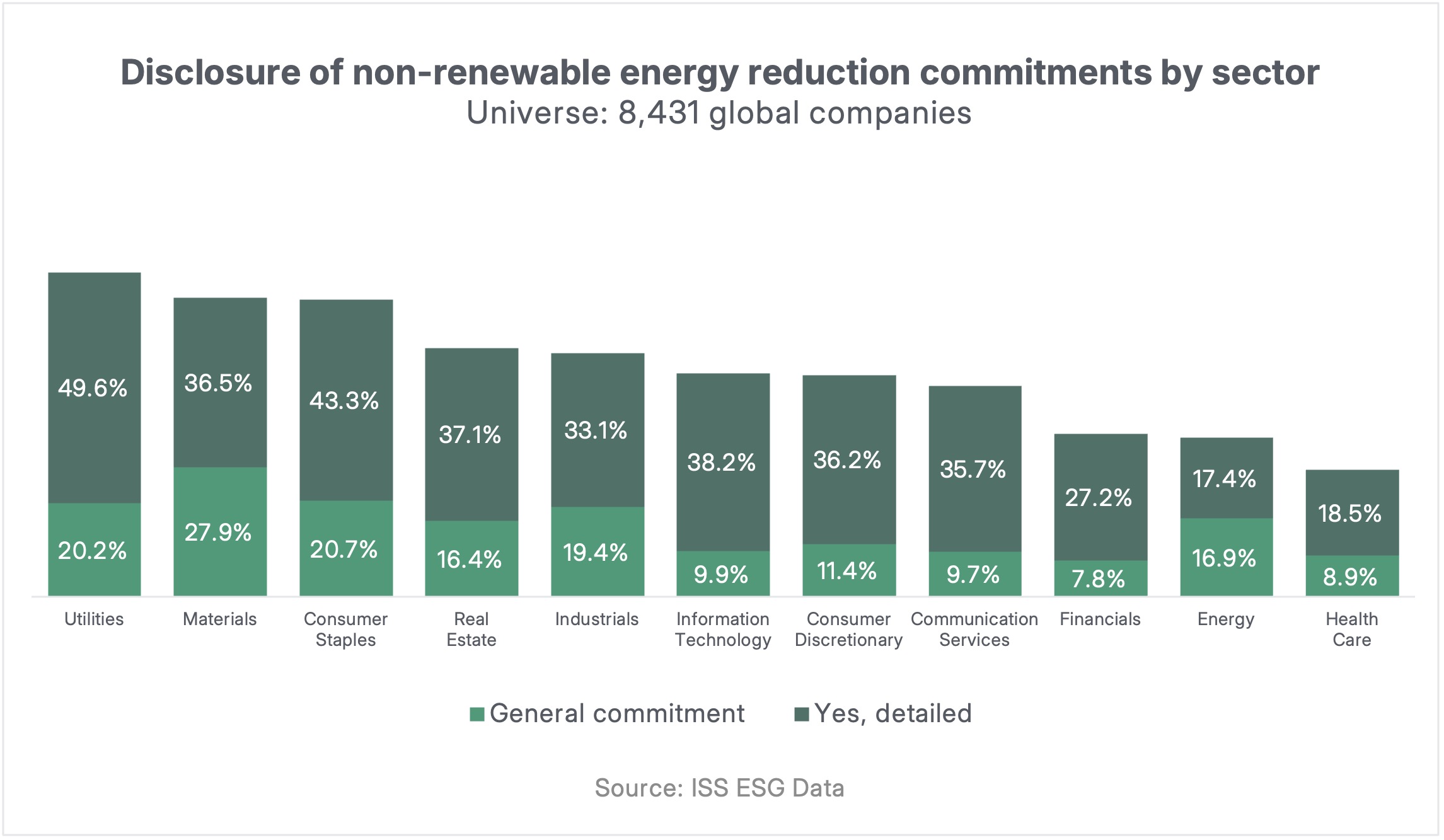
The growing focus on electrification comes against a backdrop of significant differences in how companies are addressing their energy transition. ISS STOXX data show that 49.6% of utilities disclose a detailed approach, compared with 17.4% of energy companies and 18.5% of health care companies. While this indicator does not directly measure electrification, the variation points to the different starting points and challenges companies face as they seek to shift towards cleaner energy and, where feasible, electrify their operations.
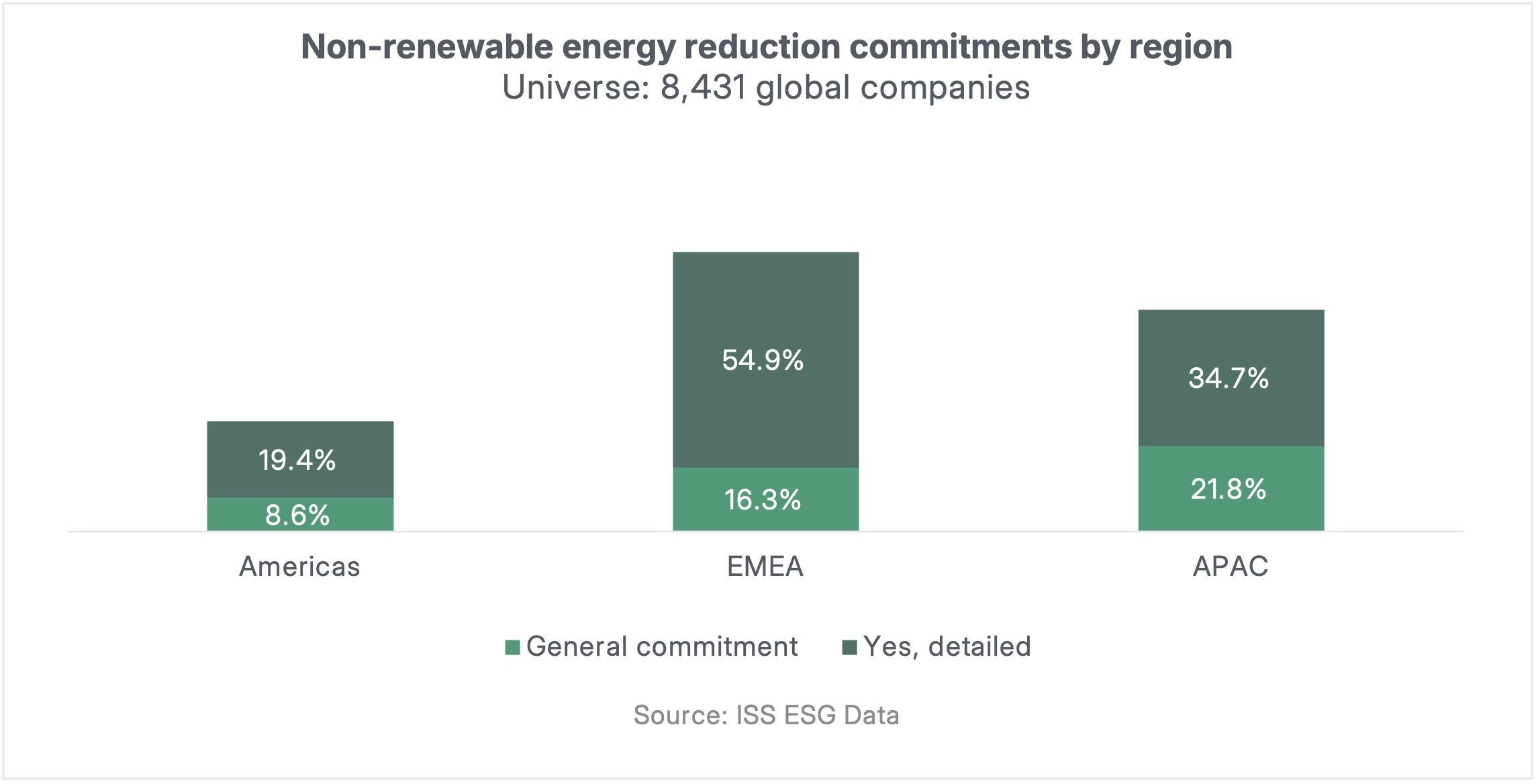
The regional picture is similarly uneven. More than half of EMEA companies (54.9%) in the dataset disclose a detailed approach to reducing non-renewable energy consumption, compared with 34.7% in APAC and only 19.4% in the Americas.
How Electrification Could Shape Corporate Transition Planning
Discussions at COP31 reinforce a broader trend seen throughout 2026 toward the practical implementation of climate commitments. For companies, this raises increasingly practical questions around which operations can be electrified, access to clean electricity, supporting infrastructure, and the implications for investment and transition planning.