
U.S. Proxy Season: Say-on-Pay, One-Time Awards, and Equity Plan Trends

Strength in Say-on-pay outcomes suggests that investors view most compensation programs as reasonably aligned with performance, even as certain pay practices—such as one-time equity awards—persist.
The 2026 U.S. proxy season reflects continued strength in Say-on-Pay (SOP) outcomes relative to recent years. While headline voting results jump to a five-year high, shifts in both the prevalence and structure of one-time equity awards suggest that companies are once again relying on targeted compensation tools to address retention, leadership transitions, and ongoing market uncertainty. Meanwhile, activity related to equity plan proposals remains elevated, reinforcing the central role of equity in pay design. These dynamics point to broad but nuanced investor support for key executive compensation proposals.
Strong Year-to-Date Say-on-Pay Support
Say-on-Pay outcomes, perhaps bolstered by healthy market returns in fiscal year 2025, demonstrate robust shareholder support with median approval levels peaking this year for January-June meetings at 93.5% for the S&P 500 and 96.2% for the Russell 3000. Meanwhile, through June 8, 2026, only nine proposals failed, underscoring a continuation of historically low failure rates in recent years. While full-year outcomes remain to be seen, year-to-date results indicate that SOP support remains resilient.
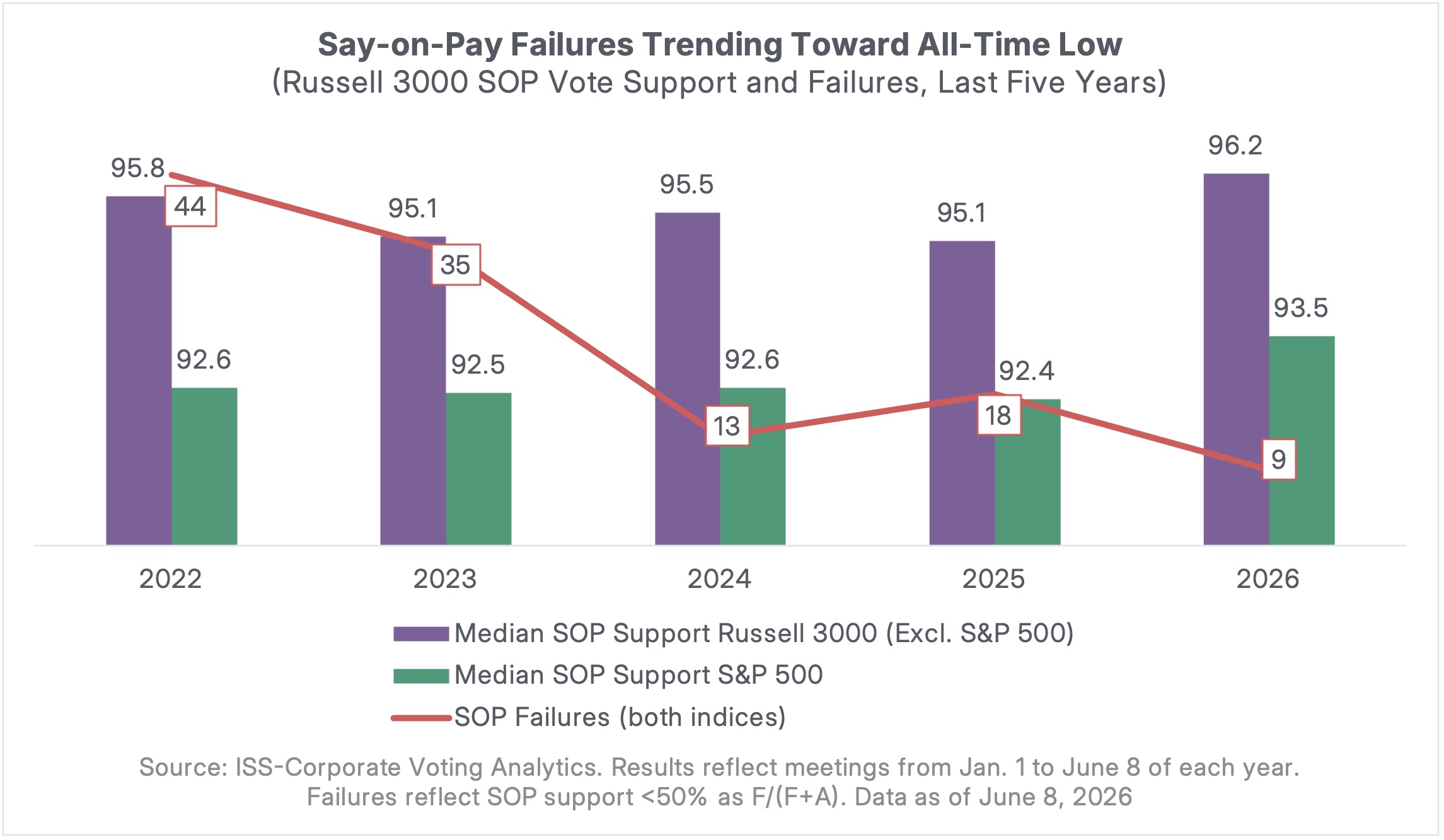
The strength in SOP outcomes suggests that investors view most compensation programs as reasonably aligned with performance, even as certain pay practices—such as one-time equity awards—persist.
One-Time Equity Grants Up in Volume and More Sizable for the S&P 500
Increases in the prevalence and size of one-time awards have not translated into lower support levels or more failures. Rather than reflecting a reduction in the use of one-time awards, companies may be deploying them more selectively or structuring them in ways that mitigate investor concerns.
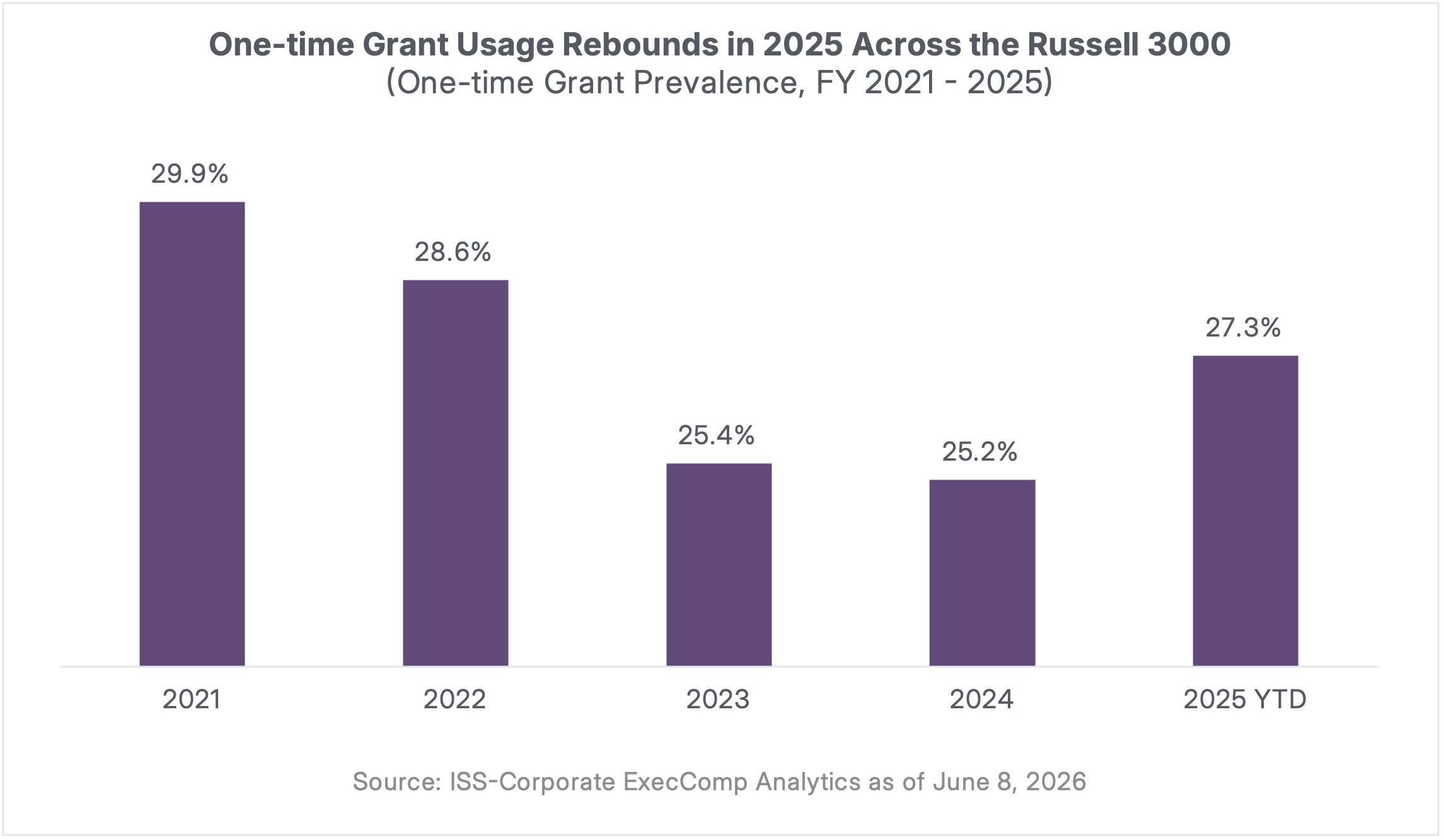
Following a post-pandemic peak of nearly 30% of Russell 3000 companies in 2021, the prevalence of one-time equity awards declined steadily through 2024, bottoming out at 25% and reflecting a normalization of compensation practices. However, year-to-date data disclosed for fiscal year 2025 indicates a reversal of that trend, jumping to 27%.
One-time awards typically remain a key tool for addressing discrete compensation situations, such as executive retention or transitions. Although prevalence remains below peak levels following the pandemic, the recent increase suggests companies have experienced a greater need to address retention and turnover concerns during the year.
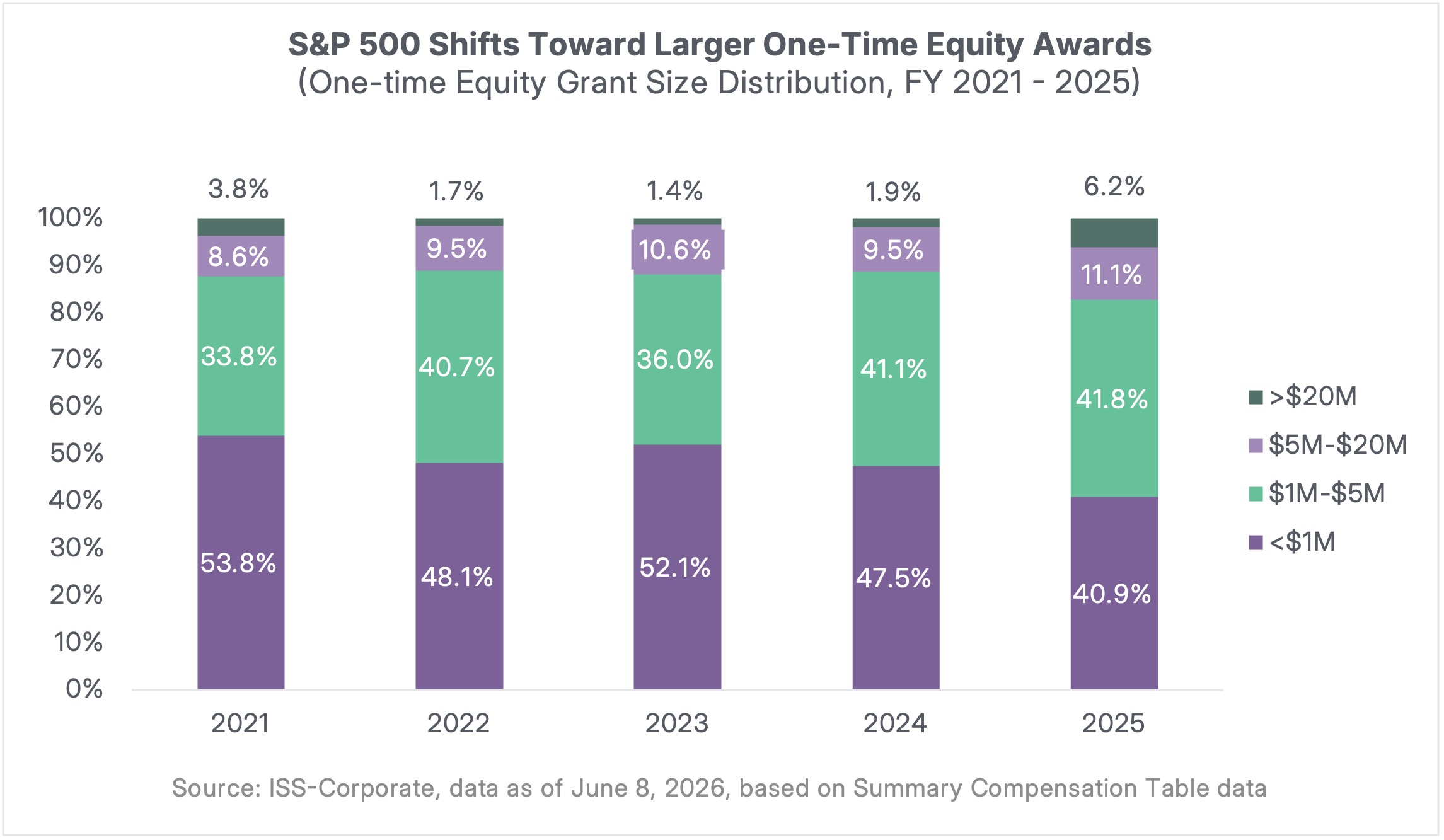
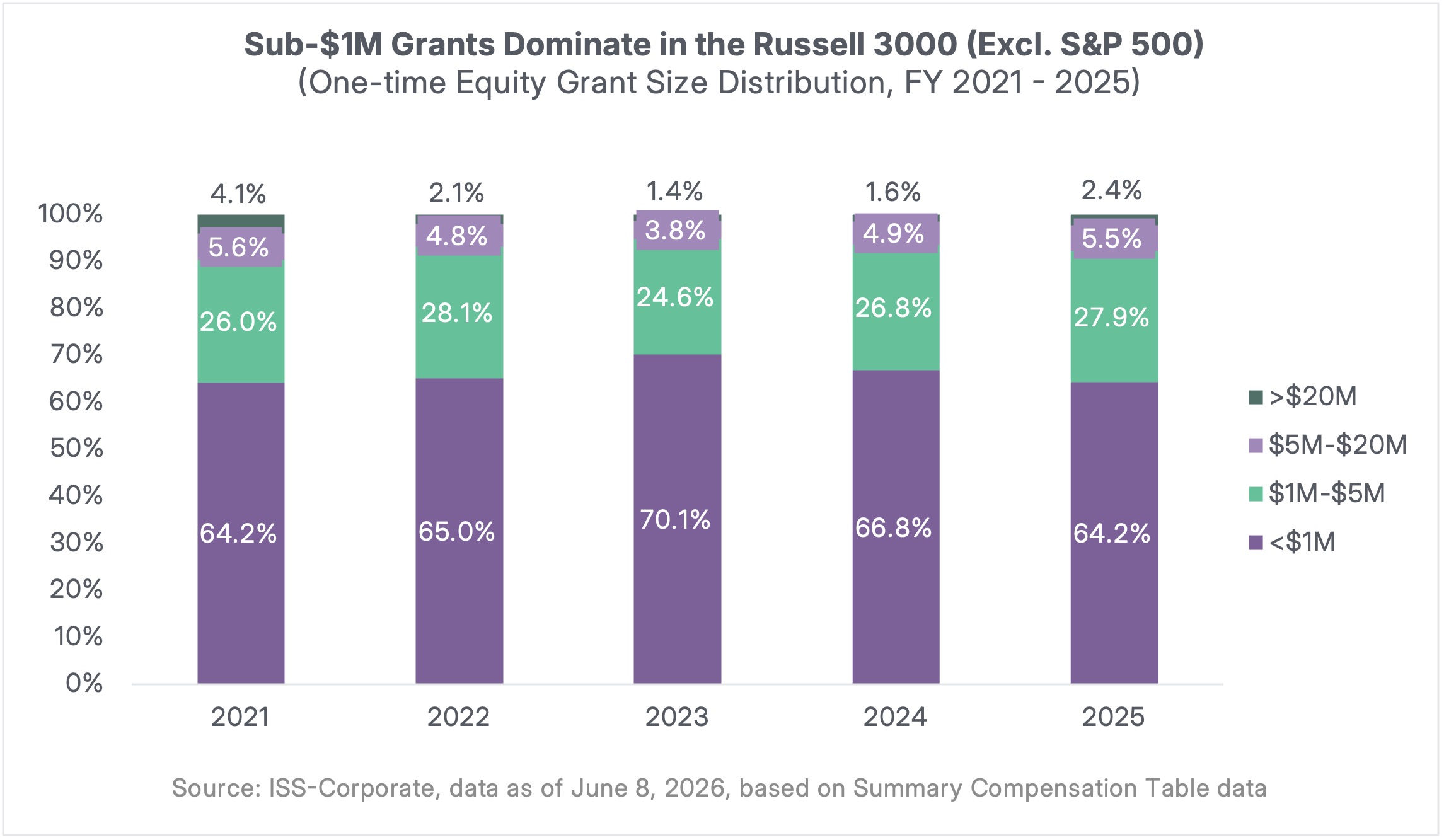
Most one-time equity awards remained concentrated in modest value ranges, with a majority falling below $5 million. However, the upper end of the distribution has shifted. Among S&P 500 companies, larger one-time awards have become more common, particularly in the $5 million to $20 million range.
Notably, so-called mega grants exceeding $20 million increased in 2025 rising in prevalence by approximately 63% over the previous peak in 2021. These mega grants are most often associated with executive recruitment, retention, or leadership transitions requiring companies to secure or retain key talent. Although these awards remain rare, the increase suggests more willingness among some large-cap companies to utilize sizable grants. In contrast, companies across the broader Russell 3000 exhibit a more modest distribution, with most awards concentrated below $1 million and fewer in the largest tiers.
Equity Plan Volume Down Slightly
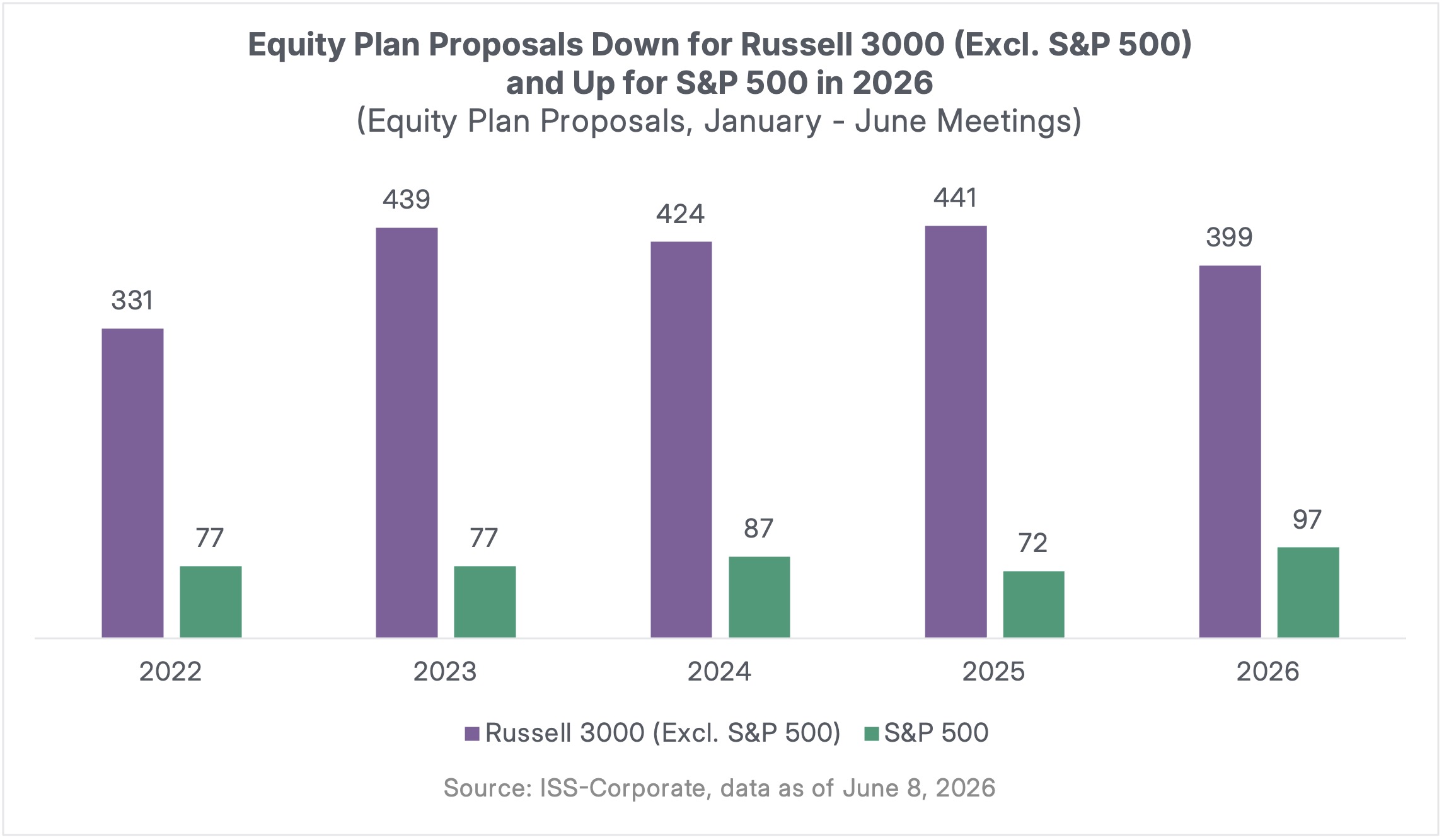
While annual volume has been relatively consistent in recent years, equity plan proposal activity declined by 3.4% from 513 such proposals on ballot in 2025 to 496 in 2026, based on January-June meetings. Over the past five years, levels climbed with higher activity primarily in the broader Russell 3000 (Excl. S&P 500) before declining in 2026. In contrast, S&P 500 activity remained lower overall but increased this year.
The consistency in proposal submissions, despite strong equity market performance, suggests that companies are taking a more disciplined approach to managing their equity plans. Companies are maintaining a steady cadence of plan renewal. As a result, equity plan proposal volume is likely to remain elevated relative to historical levels, reflecting a sustained reliance on equity compensation as a core component of pay design.
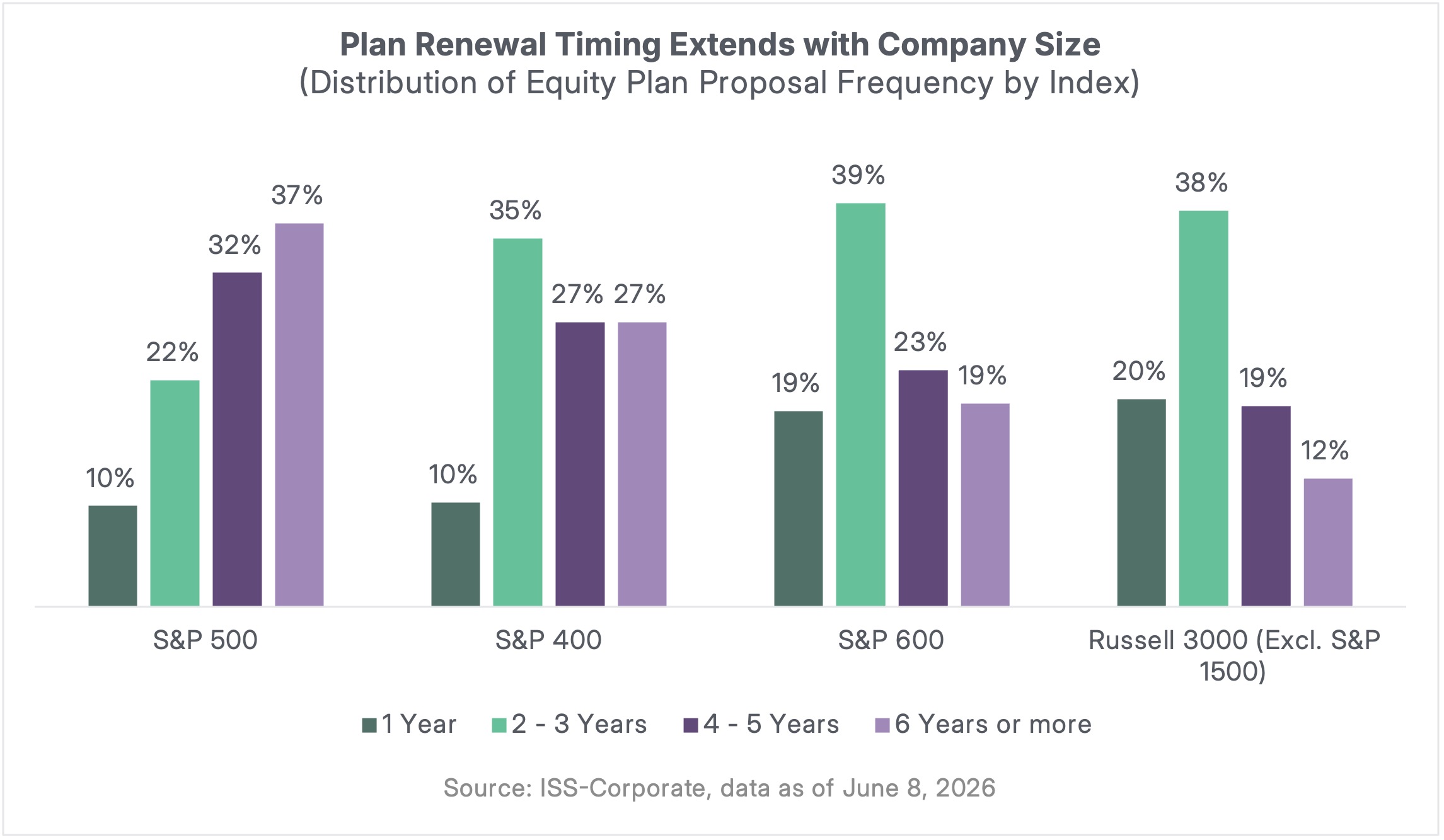
Based on data collected by ISS-Corporate, most companies operate on a two- to five-year cadence for the frequency of their equity plan proposals. This distribution reflects a balance between maintaining sufficient share availability and managing shareholder concerns related to dilution.
Differences across indices remain notable. Larger companies, particularly within the S&P 500, tend to operate on longer renewal cycles, supported by larger initial share pools and more predictable grant practices. Smaller companies, by contrast, are more likely to operate on shorter refresh cycles due to greater variability in equity usage and a higher sensitivity to share depletion.
ISS-Corporate’s Approach to Proxy Season Insight
An increase of larger, targeted one-time awards this season, combined with sustained equity plan activity, highlights equity as an important strategic tool. Meanwhile, the persistence of strong investor support suggests that investors are exercising greater restraint and deferring more to boards on compensation decisions.
In this environment, companies should not equate strong voting outcomes with an absence of scrutiny. As compensation practices continue to evolve, particularly with respect to the size and structure of one-time awards, investor focus is likely to remain centered on the rationale, transparency, and alignment of these decisions with long-term shareholder value.
As shareholders continue to cast say on pay votes this proxy season, companies are being assessed on several key areas:
- Pay‑for‑performance alignment, particularly in light of recent results;
- Long‑term incentive design, including the balance between performance‑based and time‑based awards;
- Compensation levels and pay mix relative to peers and recent trends;
- Disclosure quality and the strength of the compensation narrative;
- Use of equity awards outside the regular equity plan award cycle;
- Incentive time horizons, including evolving preferences around vesting and performance periods; and
- Alignment with institutional investor perspectives.
Taken together, these factors will play an important role in shaping shareholder support outcomes this season. ISS‑Corporate’s Compensation and Governance Advisory team supports issuers by conducting pay‑for‑performance risk assessments, providing peer benchmarking, advising on incentive design structures, and reviewing draft disclosures to enhance clarity and alignment with investor expectations.